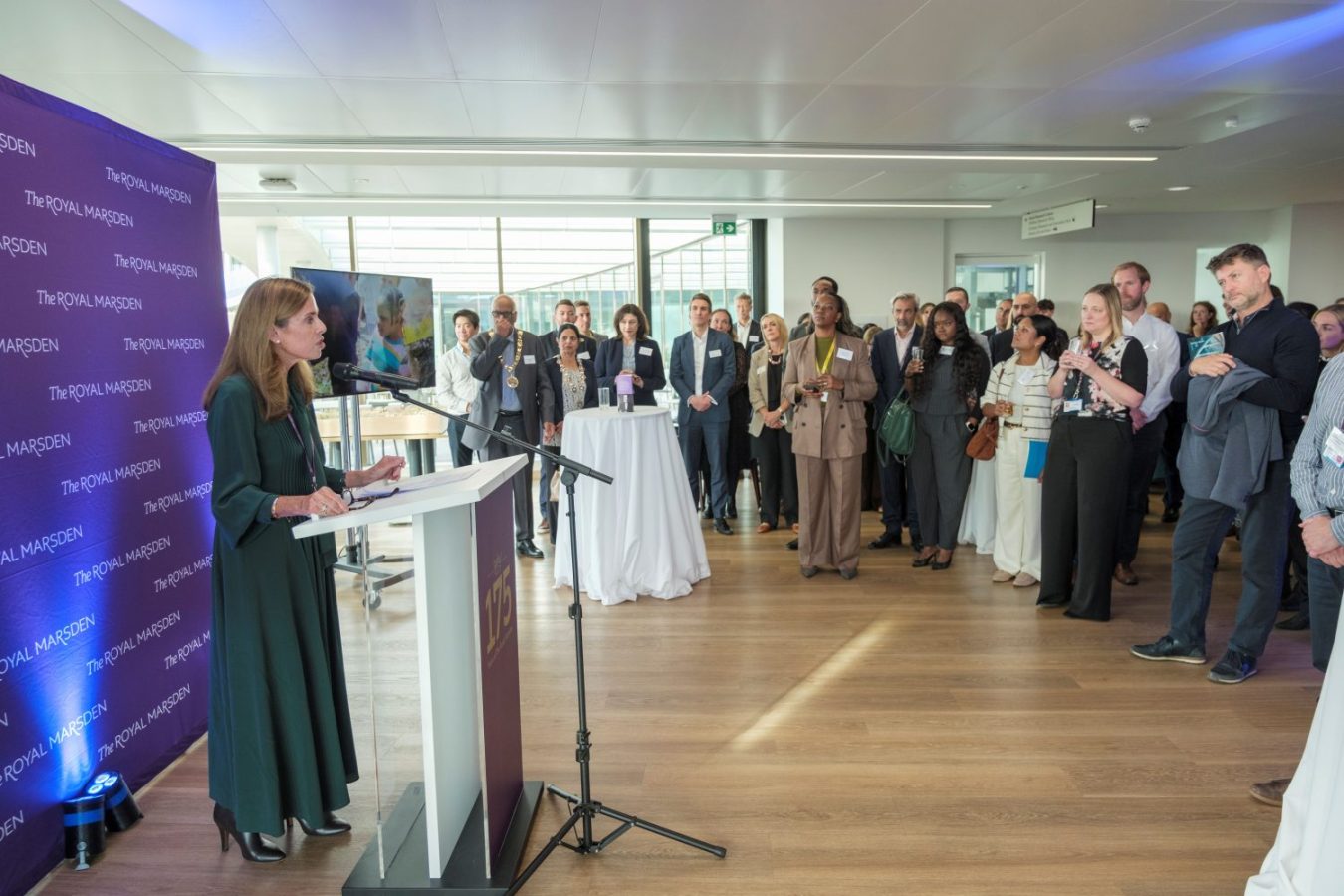
London Cancer District is pleased to welcome The Royal Marsden’s new Centre for Cancer Genomics. The Centre will improve how cancer is diagnosed, help tailor treatment to each patient, and widen access to clinical trials across the UK.
It is funded by The Royal Marsden Cancer Charity, with an infrastructure grant from the National Institute for Health and Care Research (NIHR). It is the first NHS facility designed specifically to develop and deliver composite biomarker testing. This approach combines several kinds of patient information, including genetic mutations, immune system characteristics and imaging data. Machine learning then finds patterns in that information and predicts which treatments are most likely to work.
Expanding liquid biopsy and national trials capacity
The Centre will also expand circulating tumour DNA (ctDNA) testing. This is a “liquid biopsy” that detects fragments of tumour DNA in a simple blood sample. The Royal Marsden was the first NHS hospital to deliver ctDNA testing at scale, in 2023, and co-led a national pilot that received samples from hospitals across the country.
The new Centre will act as a national facility for biomarker testing in clinical trials. It will analyse samples sent from hospitals around the UK, so patients won’t always need to travel to a specialist centre to take part in research. Its translational research teams will turn laboratory discoveries into tests and treatments that can be evaluated in the clinic.
Professor Michael Hubank, Scientific Director of Clinical Genomics at The Royal Marsden, said the Centre will build the capacity to develop and deliver highly sophisticated tests, so that more patients benefit from advanced testing and personalised treatment.
A boost for genomics in London Cancer District
London Cancer District brings together The Institute of Cancer Research, The Royal Marsden and partners in Sutton to speed up the journey from discovery to patient benefit. The new Centre adds to the district’s strength in genomics and precision oncology, and creates new opportunities for companies working in diagnostics, sequencing, data and AI.